

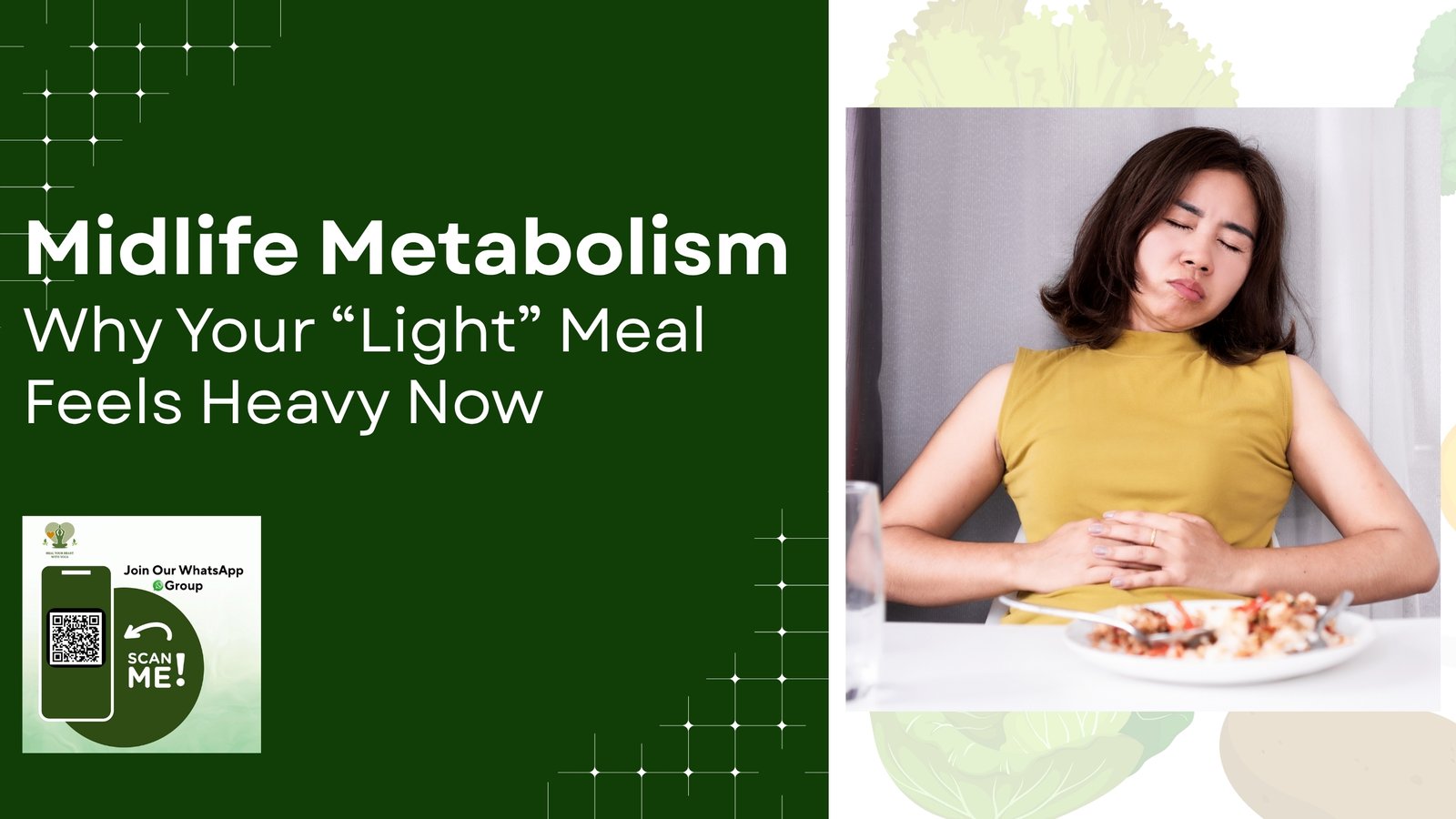
That “light” meal in your 20s now feels heavy in your 40s.
That’s not just age, that’s midlife metabolism.
What Is Midlife Metabolism?
Metabolism is the body’s way of converting food into energy. But as we cross our 40s and 50s, that process slows down, not because our bodies “give up,” but because they adapt.
Here’s what’s changing inside:
- Muscle mass declines: Muscle is your body’s metabolic engine. With age, it starts to shrink, and since muscle burns more calories than fat even at rest, your overall calorie burn drops.
- Hormonal shifts: Estrogen, testosterone, and thyroid hormones — all key regulators of metabolism, begin to decline, changing how your body stores and uses energy.
- Digestive efficiency: Enzyme levels and gut motility reduce slightly, making digestion slower and nutrient absorption less efficient.
- Cellular slowdown: Your mitochondria (the “power plants” of your cells) become less active, meaning energy production decreases subtly over time.
Why Muscle Tops the List
Among all midlife changes, muscle loss (sarcopenia) is the biggest driver of slower metabolism.
After the age of 30, adults lose 3–8% of muscle per decade, and the pace accelerates after 50.
Less muscle → fewer calories burned → easier fat gain → slower metabolism.
The good news? Muscle loss isn’t inevitable. You can rebuild it at any age.
How to Keep Your Metabolism Active After 40
Midlife metabolism isn’t your enemy, it’s an invitation to evolve. Here’s how to sync your habits with your biology:
1. Build Muscle
Do strength training 2–3 times a week. It signals your body to preserve and build lean muscle, your best protection against metabolic slowdown.
Yoga with resistance bands or slow, controlled asanas can also help improve muscle tone and endurance.
2. Eat Enough Protein
Protein is the building block for muscle repair. It also increases thermogenesis (the calories you burn while digesting food).
Add lentils, eggs, tofu, paneer, or quinoa to your meals — aim for protein in every plate.
3. Stay Active Daily
Movement isn’t limited to workouts. Climb stairs, walk post-meals, stretch between work calls.
These micro-movements keep your metabolism “switched on” throughout the day.
4. Prioritise Sleep
Your metabolism resets during sleep.
7–8 hours of quality sleep balances appetite-regulating hormones like ghrelin and leptin, keeping cravings in check.
5. Manage Stress
Chronic stress releases cortisol, which signals the body to store fat, especially around the abdomen.
Meditation, deep breathing, chanting, or short walks outdoors can restore metabolic balance naturally.
6. Hydrate Well
Water fuels cellular energy production and helps your body burn calories efficiently.
Start your day with warm water and sip regularly throughout the day, not just when thirsty.
7. Avoid Extreme Dieting
Severely cutting calories can backfire. When you eat too little, your body enters energy-saving mode, slowing metabolism further.
Choose balanced meals at regular intervals, your body thrives on rhythm, not restriction.
The Heart of It All
Metabolism isn’t about speed; it’s about harmony.
It reflects how well your body, mind, and hormones communicate.
When you build strength, eat mindfully, rest deeply, and manage stress, your metabolism responds with renewed energy, focus, and vitality.
Midlife isn’t the slowing down of your body, it’s a recalibration.
Learn its rhythm, nourish it, and let your inner energy rise again.
The Protein Paradox: Why Eating More Could Be the Key to Eating Less