

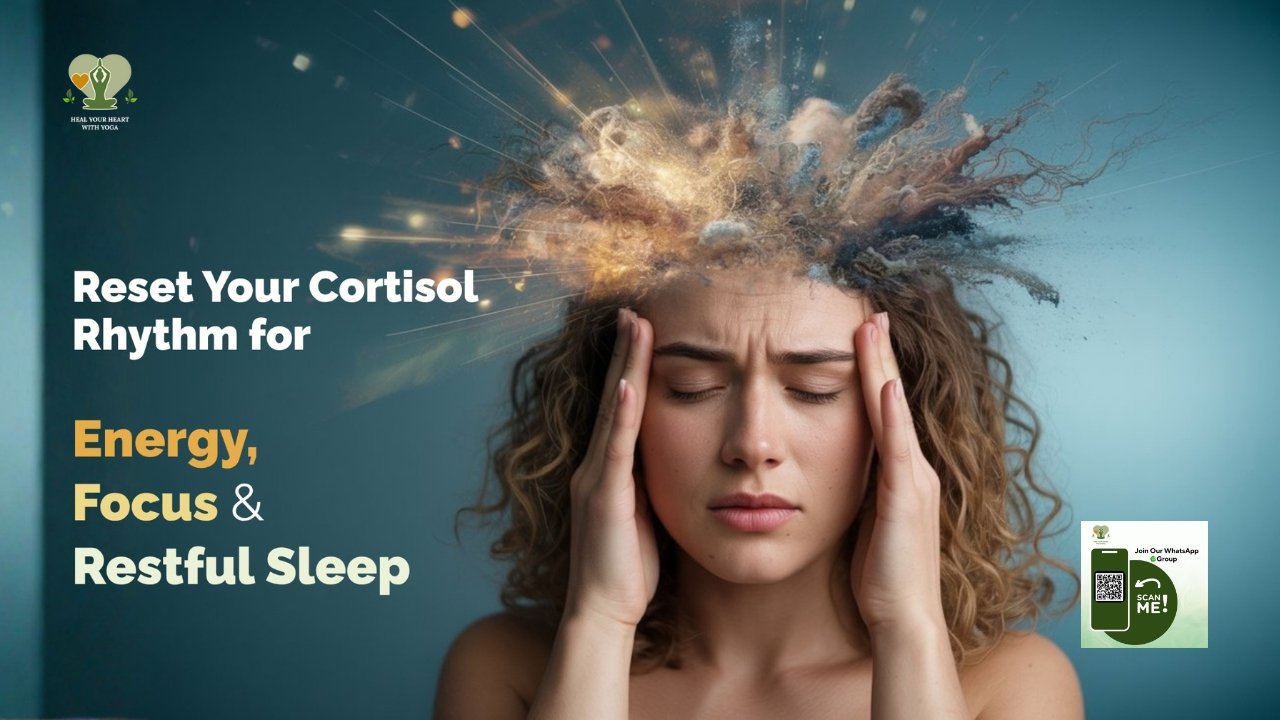
Let’s talk about Cortisol.
When we hear “cortisol,” we immediately think of stress-and-strain. But that’s only part of the story. Cortisol is also your body’s energy hormone, your wake-up call, alert signal and recovery regulator. The issue isn’t cortisol itself, it’s when the 24-hour rhythm is disrupted.
Morning Veil: High Cortisol ≠ Bad
In healthy adults, cortisol peaks in the first 30-45 minutes after waking, known as the cortisol awakening response (CAR). This surge helps you transition from sleep to wakefulness.
A study found that early-morning bright light exposure (≈800 lux) increased cortisol by ~35% compared to darkness in the first hour after waking.
Another review links cortisol’s rhythm directly with cardiovascular and metabolic health.
Hence, getting the morning light surge and kick-starting cortisol at the right time matters immensely.
Movement & Timing: Your Hormone Hack
Exercise influences cortisol too, but timing counts. A systematic review found that evening intense workouts tend to delay the cortisol rhythm and may affect sleep, while morning workouts can actually reduce cortisol load and help sleep quality over time.
In simple terms, move when your body expects energy, not when it expects rest.
Evening Wind-Down: Low Cortisol for Good Night
Just as cortisol should be high in the morning, it needs to be low in the evening to allow melatonin production, deep sleep, and hormonal recovery. Screen time, late meals or shift work flatten the curve and interfere with rhythm.
The message? Evening routines that calm your system- dim lights, slower breathing, lighter carbs, restores hormonal harmony.
Simple Steps You Can Use
- Get outside within 30-60 minutes of waking: natural light sets your internal clock. If you wake early before sunrise, consider a 10,000 lux light box.
- Plan exercise for morning or early afternoon & avoid late intense sessions if sleep is a priority.
- Create an evening ritual: dim lights, avoid screens, deep-exhale breathing, a small starchy snack.
- Hold off heavy caffeine or electronic screens until after your natural cortisol peak. A regular wake-up time helps your rhythm stay anchored.
Why This Matters
Cortisol isn’t a villain. It’s your body’s manager of alertness, energy, hormone balance and recovery. When it peaks and falls when it’s supposed to, you feel clearer, calmer and more alive. When it doesn’t, you feel frazzled, wired at night, sluggish by morning and your health pays the price.
Start with your light, movement and evening tone and the hormone rhythm begins to look less like chaos and more like harmony.