

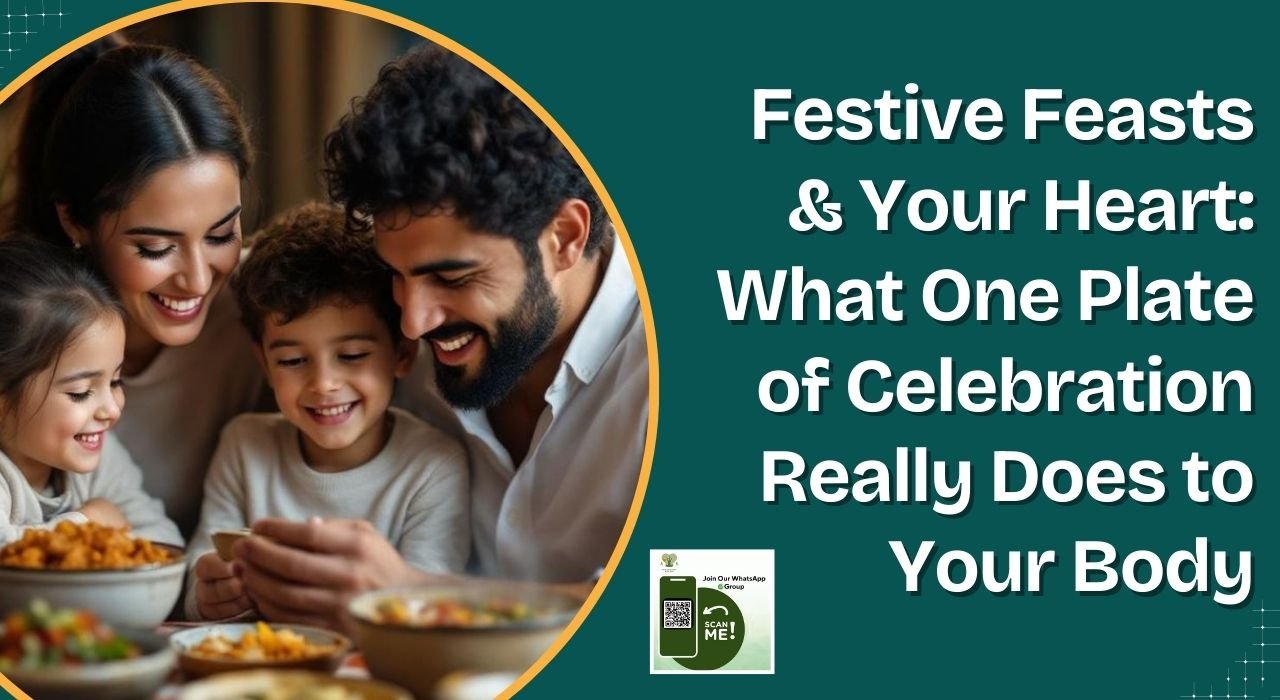
Festive food has a special power. It gathers families, revives memories, softens conversations and yes, sometimes makes our hearts beat a little faster for reasons beyond emotion.
Every festive season brings the same silent worry:
“Am I ruining my heart with all this food?”
Let’s pause the guilt and look at the science, without fear-mongering, without detox drama, and without pretending moderation is always easy.
First Things First: One Feast Does Not Break a Heart
Your heart is not fragile. It’s adaptive, resilient, and designed to handle variation. A single festive meal, even a rich one does not cause heart disease. What matters is the pattern, not the plate.
However, large meals do create temporary physiological changes:
- Blood is diverted to the digestive system
- Heart rate increases slightly
- Blood pressure may rise for a short period
- Blood sugar and triglycerides spike temporarily
This is normal. It’s your body doing its job. The problem begins only when festive eating becomes festive living i.e. heavy meals, poor sleep, stress, inactivity day after day.
Why Heavy Meals Feel Heavy on the Heart
Ever noticed how you feel sleepy, bloated, or slightly uncomfortable after a big festive lunch?
Here’s what’s happening behind the scenes:
- Digestion demands blood flow, so the heart works a little harder
- Refined sugars spike insulin, which can temporarily stiffen blood vessels
- Excess salt pulls in water, raising blood pressure briefly
- Large portions compress the diaphragm, making breathing shallower
None of this is dangerous for a healthy heart, but it can feel uncomfortable, especially if you already have high blood pressure, diabetes, or anxiety.
The Real Culprit Is Not the Feast, It’s the Pace
Festive eating often comes with: Eating faster than usual, eating later than usual, sitting longer than usual, sleeping worse than usual. This combination strains the nervous system, not just the heart. When digestion and stress overlap, the heart gets mixed signals:
Work harder, but recover slower.
That’s when palpitations, heaviness, or fatigue show up, and fear follows.
Salt, Sugar, or Stress: What Hurts the Heart More During Festivals?
Here’s the honest answer: stress amplifies everything.
A salty meal under calm conditions has a very different impact than the same meal eaten while: rushing, arguing, overthinking, scrolling, worrying about guilt. Stress hormones make blood vessels tighter and digestion poorer.
So it’s not just what you eat, it’s how your nervous system receives it.
3 Heart-Smart Festive Practices (No Dieting Required)
Let’s make this practical.
1. Eat Slowly, Not Less
Slowing down reduces blood sugar spikes, improves digestion, and lowers post-meal heart strain. Chew well. Breathe between bites. Put the phone away. Your heart prefers rhythm over restriction.
2. Walk After You Eat (Yes, Even for 10 Minutes)
- Improves glucose control
- Reduces triglyceride spikes
- Helps blood circulate better
3. Breathe Before You Digest
Before heavy meals, take 5 slow breaths, longer exhale than inhale. This activates the parasympathetic nervous system, helping your heart and gut work together. Think of it as setting the mood for digestion.
What If You Already Have Heart Issues?
If you have high blood pressure, diabetes, any known heart disease, Festive meals still aren’t forbidden but timing, portion awareness, and calmness matter more. Eat earlier, hydrate well, avoid lying down immediately after meals, and prioritize sleep. These small choices protect your heart more than extreme food rules ever will.
Final Thought
Enjoy the food. Enjoy the people. Enjoy the moment, slowly.
And remember: A joyful heart digests better than an anxious one.
The goal isn’t to “survive” festive feasts. It’s to experience them without guilt and without harm. Your heart knows how to handle celebration, if you let it.
Give Your Gut a Break: Support Your MMC Naturally Through Fasting