

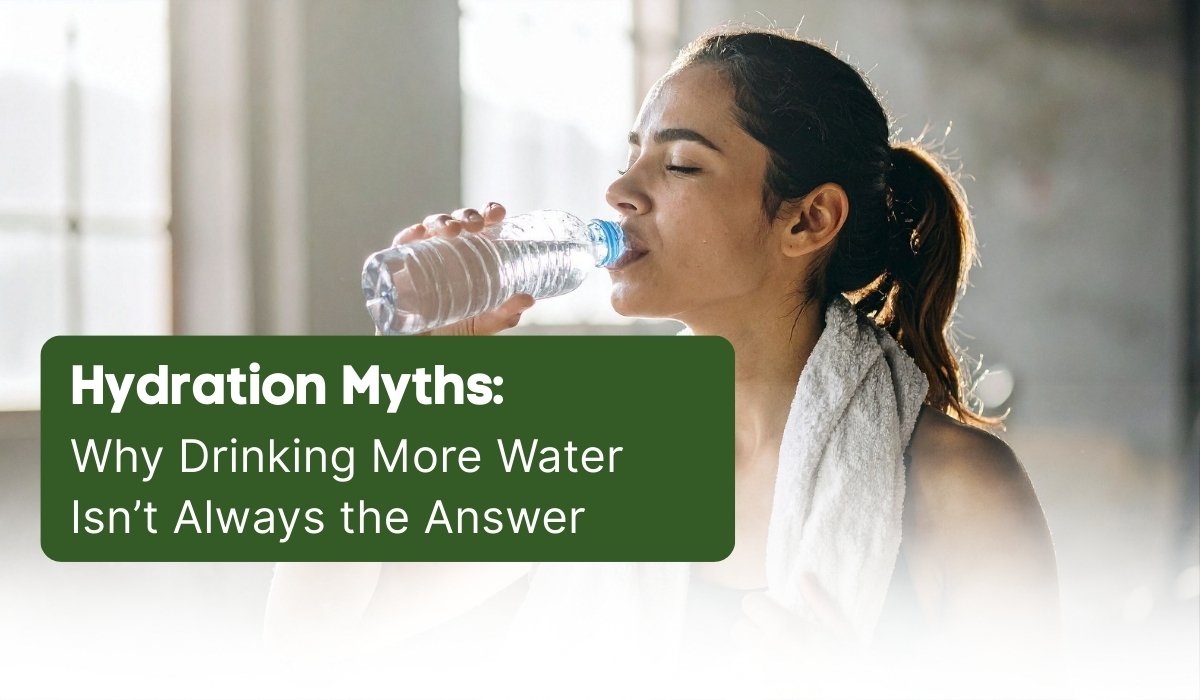
“Just drink more water.”
It’s probably the most common health advice out there and also one of the most misunderstood.
If hydration were only about quantity, people walking around with large water bottles would be the healthiest among us. Yet many still feel tired, bloated, headachy, or oddly thirsty despite sipping all day.
Turns out, hydration is not just about water. It’s about how, when, and what else your body needs to actually use it.
Myth 1: More Water = Better Hydration
Your body doesn’t hydrate by volume alone. Water has to move into cells, and that process depends heavily on electrolytes like sodium, potassium, and magnesium.
Without them, excess water can:
- Dilute electrolyte levels
- Slow digestion
- Increase bloating
- Pass straight through without hydrating cells
This is why athletes, manual workers, and people under chronic stress often feel dehydrated even when they drink frequently.
Myth 2: Sip Constantly All Day
Constant sipping may look healthy, but it can interfere with digestive efficiency.
From a physiological standpoint, digestion works best when the stomach’s natural acids aren’t constantly diluted. Large volumes of water during or immediately after meals can slow digestion and contribute to heaviness or reflux in some people.
Better strategy?
✔ Small sips when thirsty
✔ Larger hydration between meals
✔ Warm or room-temperature fluids for easier absorption
Myth 3: Thirst Means You’re Already Dehydrated
Thirst is not a failure signal, it’s a normal regulatory mechanism. The body is actually quite good at telling you when it needs fluids.
Ignoring thirst for hours is a problem. Responding to it calmly is not.
Interestingly, chronic stress can blunt thirst signals, making people confuse dehydration with fatigue, hunger, or irritability.
Myth 4: Cold Water Is Always Best
Cold water feels refreshing, but it can slow gastric emptying and cause vasoconstriction in some individuals, especially first thing in the morning or during meals.
For many people, lukewarm or warm fluids are gentler on digestion and more hydrating overall.
What Hydration Really Means
True hydration supports:
- Cellular function
- Digestion and absorption
- Blood volume and circulation
- Temperature regulation
- Brain function and mood
And that requires balance, not obsession.
The Takeaway
Hydration isn’t a competition. Instead of forcing water, aim to support absorption with electrolytes, smart timing, and attention to how your body actually responds. Sometimes, the healthiest move isn’t another sip, it’s better understanding.