

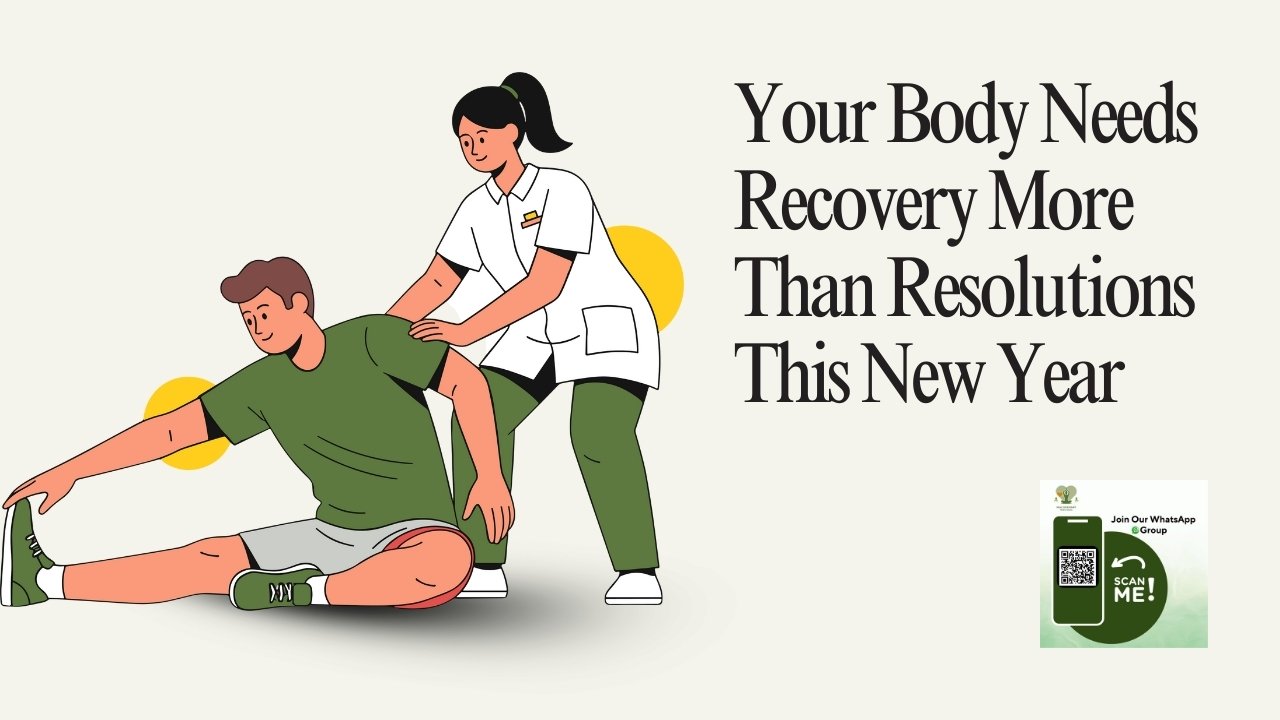
January has a strange energy. On one side, there’s pressure – new goals, new routines, new versions of yourself. On the other, there’s a body that’s still catching its breath from the year that just ended.
And here’s the quiet truth most wellness conversations miss: Your body doesn’t enter the New Year reset. It enters it tired.
Before setting ambitious resolutions, it’s worth asking a different question: What does my body actually need right now?
For most people, the answer isn’t more discipline. It’s recovery.
Why Resolutions Fail
We often blame failed resolutions on willpower, but there’s a different story.
After months of stress, irregular sleep, emotional load, travel, late meals, and screen exposure, the nervous system is already in a heightened state. Cortisol rhythms are disrupted. Dopamine is fatigued. Decision-making circuits are overloaded.
Then January arrives and we add early wake-ups, Intense workouts, Strict food rules, Productivity pressure. From the body’s perspective, this isn’t motivation. It’s another stressor.
When the nervous system doesn’t feel safe, it resists change because it’s trying to protect you.
Recovery Isn’t Rest, It’s Regulation.
Recovery doesn’t mean lying still all day or giving up on growth, but bringing the body back into balance so growth becomes possible.
True recovery includes:
- Restoring sleep-wake rhythms
- Calming the stress response
- Allowing muscles, digestion, and attention to downshift
- Creating predictability in daily patterns
When the nervous system stabilises, habits stick more easily, focus improves, cravings reduce, emotional regulation returns.
This is why people who start with recovery often succeed long-term.
Signs Your Body Is Asking for Recovery
If you notice any of these, your body is waving a small white flag:
- You wake up tired despite “enough” sleep
- Motivation comes in bursts, then crashes
- Small tasks feel disproportionately exhausting
- Digestion feels sluggish or unpredictable
- You feel emotionally flat or easily overwhelmed
These aren’t failures. They’re feedback.
A Recovery-First Way to Start the Year
Instead of asking, “What should I achieve this year?” Try asking, “What would help my body feel safer, calmer, and more supported?”
Here’s a practical starting framework:
1. Stabilise Before You Optimise
Pick consistent sleep and meal timings before adding intensity.
2. Choose Regulation Over Motivation
Breathwork, slow movement, and stillness calm stress circuits better than hype.
3. Make One Small Promise
One habit done daily beats five habits done briefly.
4. Let Recovery Lead Growth
When the body recovers, energy rises naturally.
What Changes When You Start With Recovery
People often report:
- Better sleep within days
- More stable energy through the day
- Reduced emotional reactivity
- Improved focus without effort
- A surprising return of motivation
New Year Doesn’t Need a New You
It needs a more listened-to you.
Healing doesn’t begin with pressure. Change doesn’t start with punishment. And health doesn’t grow in a stressed body.
This New Year, consider this a quiet permission slip: Recover first. Build later.